
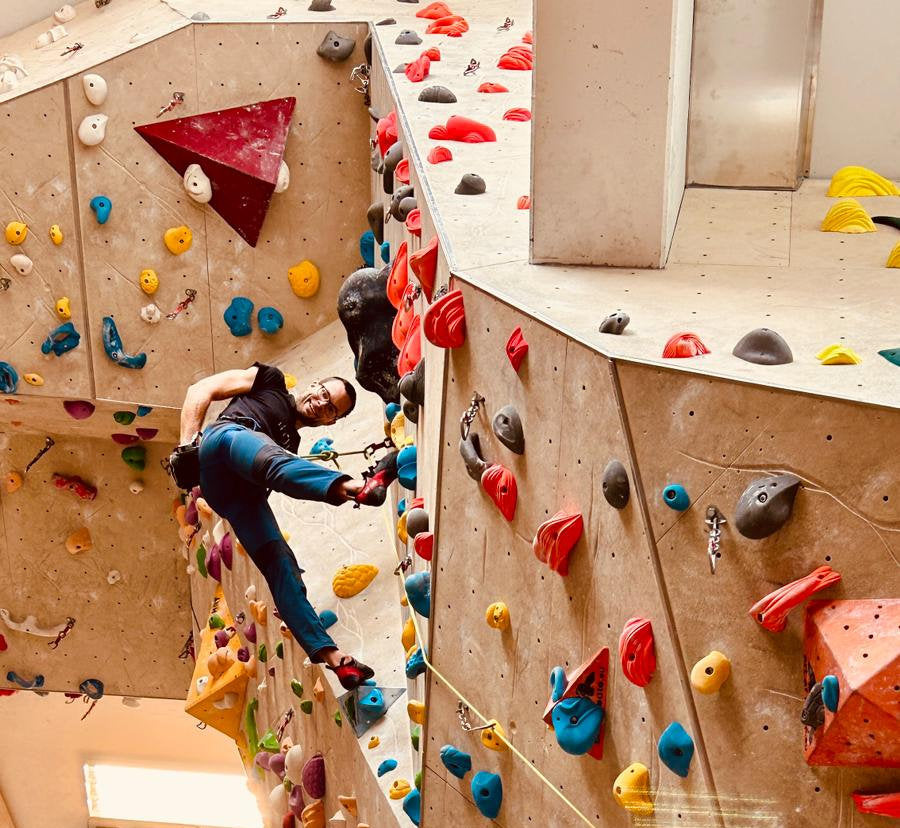
Applying strong pressure with the hand...
...reveals not only something about personality
In our culture, shaking hands is a common greeting. A quick internet search will reveal numerous articles, recommendations, and even tutorials on what the perfect handshake looks like (or should look like).
It is pointed out that one can learn something about the personality of the person shaking hands from their handshake:
According to this, strong pressure with the hand is supposed to signal, for example: "This person knows what they want!".
So far, so good. But now comes something that will probably seem strange to you:
Did you know that handshake has been and continues to be intensively researched as a medical biomarker?

Grip strength in medical research
Below I would like to present a few striking quotes from studies on a wide variety of topics:
Biological age
There are various ways to determine biological age: The most common is measuring telomeres. But other "biological clocks" are also known, such as DNA methylation. And this seems to correlate with grip strength.
https://onlinelibrary.wiley.com/doi/10.1002/jcsm.13110
Life expectancy, risk of illness and death
Handgrip strength (HGS) is frequently used as an indicator of overall muscle strength in older adults, and low HGS is associated with a variety of poor health outcomes, including chronic disease, functional disability, and overall mortality.
https://pubmed.ncbi.nlm.nih.gov/29943230/
https://pubmed.ncbi.nlm.nih.gov/31631989/
https://pubmed.ncbi.nlm.nih.gov/25982160/
https://pubmed.ncbi.nlm.nih.gov/30072137/
https://pubmed.ncbi.nlm.nih.gov/29739772/
Heart attack and stroke risk
Our results demonstrate that HGS can be used as an independent predictor of stroke in middle-aged and elderly populations in European, American, and Chinese populations.
This study suggests that measuring grip strength is a simple, cost-effective method for assessing risk for all-cause mortality, cardiovascular death, and cardiovascular disease.
https://pubmed.ncbi.nlm.nih.gov/37142986/
https://pubmed.ncbi.nlm.nih.gov/25982160/
Brain performance, memory, and emotional perception
These results suggest that HGS is associated with measurements of neurocognitive brain health in men and women, and they fit into a growing body of research indicating that measures to increase muscle strength, particularly in middle-aged adults, may be promising for maintaining neurocognitive brain health.
https://pubmed.ncbi.nlm.nih.gov/31390821/
https://pubmed.ncbi.nlm.nih.gov/38876580/
https://pubmed.ncbi.nlm.nih.gov/35737388/
https://pubmed.ncbi.nlm.nih.gov/36076200/
Metabolic syndrome, diabetes, fatty liver
Most studies included in this systematic review found a significant association between reduced heart rate variability (HGS) and metabolic syndrome or some of its components, particularly abdominal obesity and insulin resistance. We conclude that below-average HGS may be associated with metabolic syndrome in older adults.

What even is normal?
Since there are many studies on the relationship between grip strength and diseases or life expectancy, a lot of data is available.
A British study has compiled this data and concludes that average maximum strength is usually reached in the late 20s.
According to this data, it is 51kg for men and 31kg for women:
https://pubmed.ncbi.nlm.nih.gov/25474696/
Does training improve these values?
Or: Does it also work the other way around?
Although there are significantly fewer studies on the extent to which targeted grip strength training has a positive effect on life expectancy, it seems that there are correlations here as well.
https://pubmed.ncbi.nlm.nih.gov/34455171/
Do you know your grip strength?
Apparently, some people specifically train their grip strength with rubber balls. You can do it – but you don't have to.
I think there's an activity that's far more enjoyable. And as every child knows, enjoyment has a positive correlation with the aforementioned biomarkers:
Even as a (hobby) climber who rarely gets to enjoy climbing, my grip strength is usually outside the recommended scales...
So perhaps there is a connection between climbing and health?
To ensure longevity, the safety technology should not be neglected.
Because: Right after all the well-known metabolic and degenerative diseases (colloquially known as "common diseases") comes trauma, i.e., violent (accidental) death in the statistics...