
Lectrin-free sourdough scientifically investigated
How the desire for good bread led to a research project with FH Wels
Lectin-Free Sourdough Scientifically Examined shows how personal motivation, traditional fermentation, and modern food technology can come together. An innovative sourdough was developed from the desire for a high-quality bread without the usual lectin-rich ingredients – scientifically supported by a Master's thesis at the FH Upper Austria Campus Wels / Food Technology and Nutrition.
Many people mistakenly assume that even classic sourdoughs made from wheat, rye, or spelt are automatically lectin-free.
However, there are no reliable scientific studies to support this. It is more realistic to assume that fermentation can reduce certain lectins, but does not automatically lower them to zero. This is precisely where true lectin-free sourdough differs, as it starts with the raw ingredients and was specifically developed without classic lectin sources.
The Origin: Bread Was Missing
When Tobias started his lectin-free diet, he quickly noticed positive changes. But one food item he particularly missed was:
Bread.
It was the food he missed the most – fresh crust, moist crumb, aroma, and the true bread feeling.
Instead of doing without, he began to experiment himself. The goal: A real sourdough bread – lectin-free, high-quality, and convincingly flavorful.
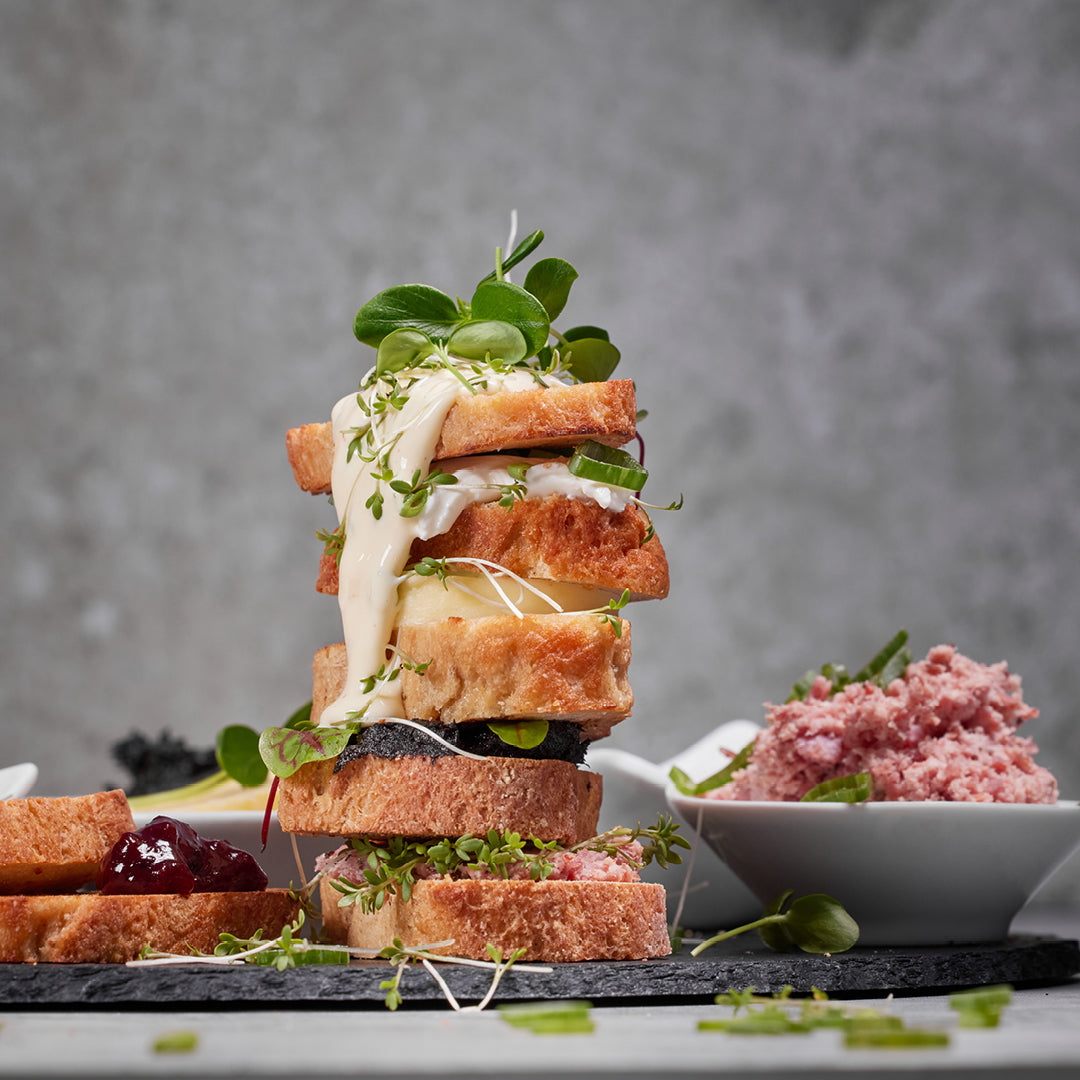
Initial results: surprisingly strong
Even after the first attempts, it became clear that this sourdough could do far more than expected.
Sensory advantages
✔ full-bodied flavor
✔ mild, pleasant acidity
✔ natural aroma
Technological advantages
✔ longer shelf life
✔ more attractive crust formation
✔ better browning
✔ moister crumb
✔ better freshness retention
Hypothesis on health benefits
In addition, the assumption arose early on that fermented lectin-free sourdough could also offer functional health benefits:
✔ Prebiotic effects through fermentable dietary fibers as food for beneficial gut bacteria
✔ Probiotic potential through living microorganisms in the active starter (before the baking process)
✔ Postbiotic substances such as organic acids, enzymes, and microbial metabolites
✔ Reduction of organic acids such as oxalic acid
✔ possible better mineral availability
✔ potentially better digestibility
These observations and hypotheses led to the central question:
Why does this sourdough work so well?
Scientific Collaboration with FH Wels
To obtain reliable answers, a collaboration was established with the FH Upper Austria Campus Wels.
There, the developed sourdough was microbiologically and technologically investigated as part of a master's thesis.
Objective of the Work
Understanding the processes behind the success of sourdough:
- Which microorganisms are active?
- Which yeasts and lactic acid bacteria dominate?
- How do they influence each other?
- How do sugars and acids change?
- Why do shelf life and crust improve?
- Can antinutritional substances be reduced?
Three Core Research Areas
Microbiology – Which species live in sourdough?
Fermentation – How do sugars, acids, and aroma change?
Product Quality – Why do crust, freshness, and texture improve?
Which microorganisms make the difference?
A sourdough thrives on a functional symbiosis of yeasts and lactic acid bacteria.
Yeasts
They form CO₂ and provide:
- Volume
- Leavening
- Airy crumb
Lactic acid bacteria
They produce:
- Lactic acid → mild flavor
- Acetic acid → more robust aroma
- Natural preservation
Result
This combination explains:
- Better freshness retention
- More complex flavor
- Natural stability
How Microorganisms Influence Each Other
A particularly exciting part of research is the interplay of microorganisms.
1. Yeasts Help Bacteria
Yeasts break down sugar and release metabolic products that lactic acid bacteria can use.
2. Bacteria Protect Sourdough
Lactic acid bacteria lower the pH value by forming acid. This inhibits undesirable germs – yeasts and adapted cultures benefit.
3. Competition for Nutrients
Yeasts and bacteria sometimes compete for sugar sources. This creates a natural balance.
4. Aroma Develops Jointly
Many flavor compounds only arise through the interaction of both groups.
Sugar Metabolism During Fermentation
In the study, sugars and acids were measured using HPLC analysis.
The following were investigated, among others:
- Glucose
- Fructose
- Sucrose
- Lactic acid
- Acetic acid
- Oxalic acid
Clear correlations between microbial growth and metabolic activity were observed.
Organic Acids in Focus: Oxalic Acid
Why is oxalic acid relevant?
Oxalic acid can bind minerals:
- Calcium
- Magnesium
- Iron
This can hinder their absorption.
Finding of the study
During fermentation, the acid profile changes significantly. This suggests that microorganisms can break down or convert organic acids.
Changes during Fermentation
Typical process:
- Sugar decreases
- Lactic acid increases
- Aroma develops
- Oxalic acid can be reduced

CONCLUSION
Lectose-free sourdough scientifically investigated impressively demonstrates how a personal idea can develop into a well-founded research project.
From the desire for bread came:
✔ flavorful sourdough
✔ longer shelf life
✔ beautiful crust
✔ living microorganism symbiosis
✔ possible pre-, pro- and postbiotic potential
✔ scientific analysis with FH Wels
✔ new insights into oxalic acid and the microbiome
An innovative path to modern bread with a scientific foundation.
You don't have to figure everything out on your own.
If you would like to learn more about a lectin-free diet, we at TOBIO can help you.
We take care of:
- Continue to enjoy your favorite dishes with different ingredients and recipes.
- Orientation, Questions & Answers
- Help with food selection
- personal support
Without any promise of healing.
With structure and transparency.
What should I eat on a lectin-free diet?
Simply put: Eat what you love most. But please use different ingredients that do not contain lectins.
Beyond that, there are nuances such as macronutrient composition, targeted avoidance of foods that have caused intolerances over time (IgG, IgE, LTT...), and so on.
New lectin-free recipes
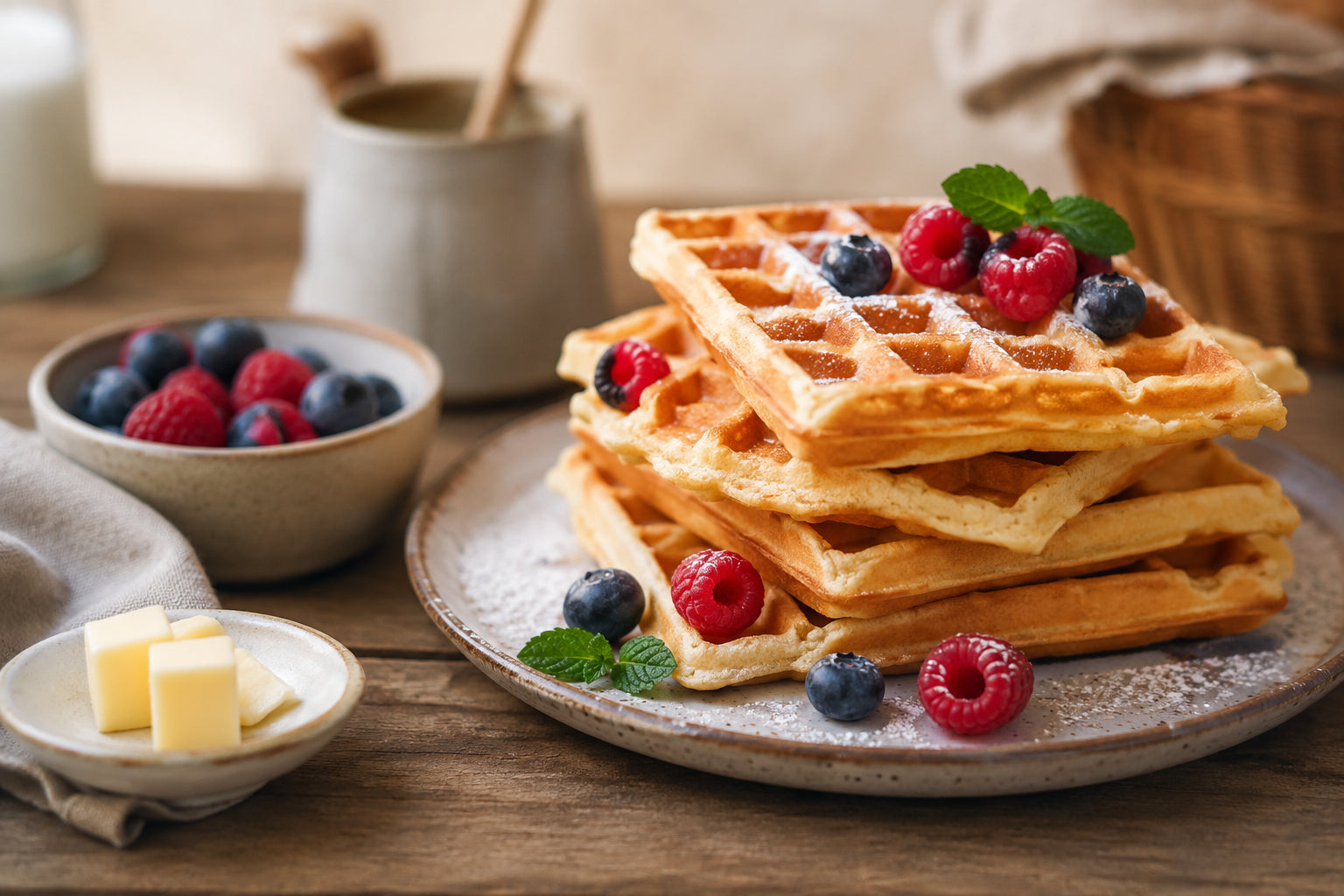
Fluffige lektinfreie BIO Waffeln mit TOBIO Backmischungen
Entdecke unser Rezept für lektinfreie BIO-Waffeln mit den TOBIO BIO Backmischungen. Schnell zubereitet, knusprig gebacken und natürlich köstlich.
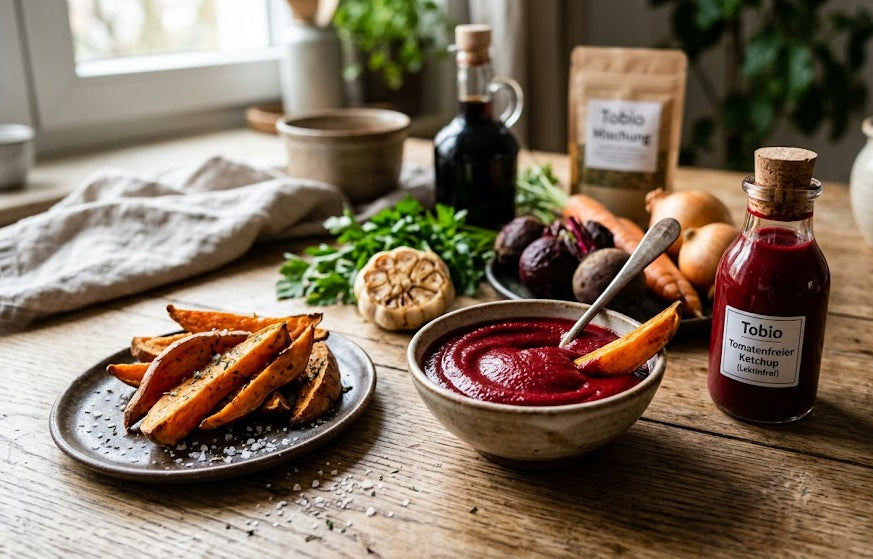
Tomatenfreier Ketchup (lektinfrei)
Entdecke ein leckeres Rezept für tomatenfreien Ketchup. Lektinfrei, cremig, natürlich gesüßt und einfach selbst gemacht – perfekt als Dip, Sauce oder Grillbegleiter.
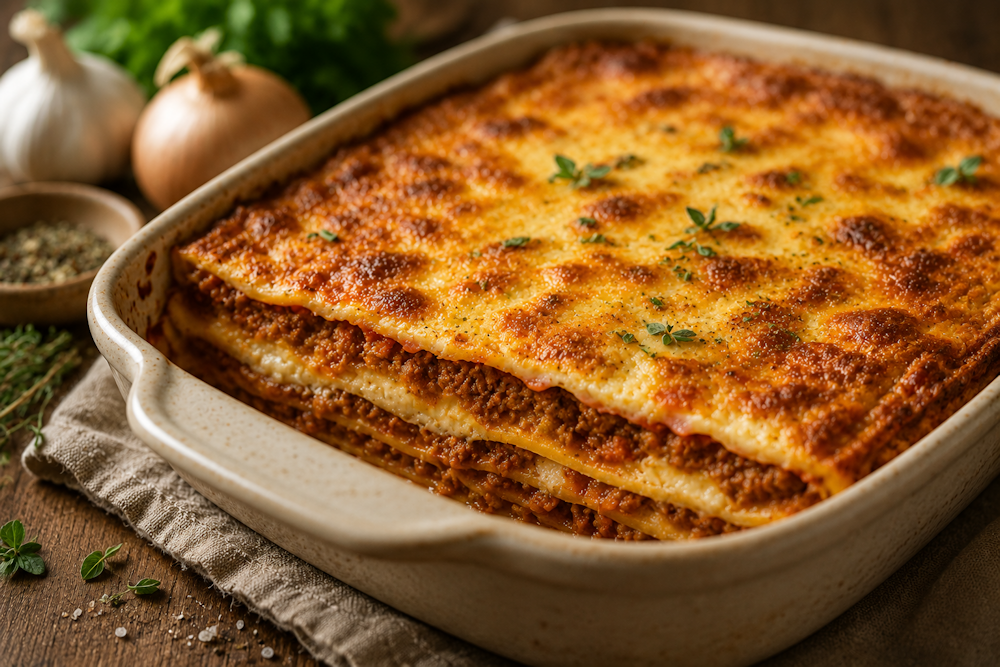
Lektinfreie Nomato Lasagne ohne Tomaten
Entdecke unsere lektinfreie Nomato Lasagne ohne Tomaten mit hausgemachten Lasagneblättern, cremiger Mornay-Sauce und aromatischer Nomato-Sauce aus TOBIO Bio-Zutaten.
Frequently Asked Questions (FAQ)
Is regular sourdough automatically lectin-free?
No. Many people mistakenly assume that traditional sourdough made from wheat, rye, or spelt is automatically lectin-free. There is currently no conclusive scientific evidence to support this. It is more likely that fermentation can reduce certain lectins – but not completely to zero.
What is lectin-free sourdough?
Lectin-free sourdough is specifically made from raw materials that do not contain classic lectin-rich grains. In this case, millets were used as the base.
Which microorganisms are important in sourdough?
Above all:
Yeasts
- produce CO₂
- loosen the dough
- provide volume
Lactic acid bacteria
- produce lactic acid
- produce acetic acid
- improve aroma and shelf life
Can sourdough reduce oxalic acid?
The study showed that the acid profile changes during fermentation. This suggests that organic acids such as oxalic acid can be partially reduced or converted.
Sources
Fasano, A. (2011). Zonulin and its regulation of intestinal barrier function. Physiological Reviews .
https://pubmed.ncbi.nlm.nih.gov/21248165/
de Punder, K. & Pruimboom, L. (2013). The dietary intake of wheat and its effects on inflammation. Nutrients .
https://pubmed.ncbi.nlm.nih.gov/26567529/
Sturgeon, C. & Fasano, A. (2016). Zonulin, a regulator of epithelial and endothelial barrier functions, and its involvement in chronic inflammatory diseases. Tissue Barriers
https://pubmed.ncbi.nlm.nih.gov/30340384 /
https://pubmed.ncbi.nlm.nih.gov/35225715/
https://www.ahajournals.org/doi/abs/10.1161/circ.129.suppl_1.p354
https://www.ahajournals.org/doi/abs/10.1161/circ.137.suppl_1.p238
https://linkinghub.elsevier.com/retrieve/pii/S0011-5029(09)00034-0
Disclaimer
The information and recipes contained on this platform and linked media reflect solely my personal experience and serve for informational purposes and as culinary inspiration. The recipes and nutritional information do not constitute medical advice, diagnoses, or treatments, nor are they intended as a substitute for professional medical advice or treatment. Any recommendations presented in the media we manage do not replace consultation with medical professionals or nutritionists. Readers with specific health concerns, food allergies, individual dietary needs, or medical conditions should seek professional medical advice before implementing the recipes or nutritional recommendations described here. The author, publisher, and operator of this platform assume no responsibility for any health problems or damages that may arise from the use of the recipes or information contained on this platform. It is strongly recommended that you seek qualified medical advice or consult a nutritionist before making any changes to your current eating habits if you have any health concerns. The authors and publishers of this media assume no responsibility for the accuracy or completeness of the information and recipes provided, and it is the reader's responsibility to consider any allergic reactions, food intolerances, or other health concerns. Furthermore, neither the authors, publishers, nor operators assume any guarantee or liability for the effectiveness of the presented measures. Zarastro GmbH is not responsible for the content of websites accessed via hyperlinks.