
Crohn's Disease Diet
why many recommendations only treat symptoms
Those who suffer from Crohn's disease often receive quick advice on nutrition such as:
- "Eat what you tolerate well."
- "Avoid fiber during a flare-up."
- "Eat easily digestible food."
- "Choose constipating foods for diarrhea."
- Take your medication, the disease is your destiny, but enjoy your life
This sounds sensible at first.
But this is precisely where a major problem begins: Most recommendations for Crohn's disease nutrition are based on symptoms – not on causes.
So the question is:
What calms the gut in the short term?
Instead of:
What made the gut sick in the first place – and what keeps the inflammation alive?
Symptomatic Nutrition Instead of Cause-Oriented Nutrition
Many dietary concepts for intestinal diseases primarily focus on:
- reducing diarrhea
- avoiding pain
- reducing stool volume
- minimizing acute irritation
- consuming enough calories
This can be helpful in the short term.
However, when foods are recommended simply because they are "well tolerated," it is often overlooked what these foods can trigger immunologically and metabolically in the body.
Precisely this is crucial for a modern Crohn's disease diet.
Diarrhea Example: Why Short-Term Relief Doesn't Automatically Mean Long-Term Benefit
When someone frequently experiences diarrhea, foods that are almost completely digested and leave little residue are often recommended.
Typical examples:
- White bread
- Toast
- Rusks
- White pasta
- Rice products
- Starchy bland food
The reasoning behind it:
- Less stool volume
- Less bowel movement
- Fewer bathroom visits
- More short-term relief
The problem:
Just because a food reduces symptoms in the short term doesn't mean it is long-term anti-inflammatory or gut-friendly.
What is often overlooked
Many of these classic "gentle diet" foods are based on grains or highly processed starches.
The following points are often ignored:
1. Lectins
Lectins are particularly common in grains and legumes.
It is believed that certain lectins can:
- irritate the intestinal lining
- bind to cell structures
- trigger immune reactions
- exacerbate existing inflammation
- stress the intestinal barrier
This is particularly relevant for Crohn's disease.
2. Blood Sugar and Insulin
Many easily digestible starch products can potentially lead to over time:
- rapid blood sugar increases
- high insulin spikes
- unstable energy supply
- increased cravings
- metabolic stress over years
- Further inflammation: Type 2 diabetes, arteriosclerosis, etc.
This is also suboptimal for people with chronic inflammation.
3. Nutrient Density
Many classic gentle diet foods provide little:
- micronutrients
- high-quality fats
- protein quality
- true "regeneration building blocks"
Crohn's Disease Diet: Alleviating Symptoms or Removing Causes?
Here lies the crucial difference.
Symptom-Oriented Approach:
"What causes fewer symptoms?"
Cause-Oriented Approach:
"Which foods irritate the bowel or potentially trigger an immune reaction daily – and should be removed?"
Especially with chronic illnesses, the second question is often more important.
Because if diet is part of the problem, simply reacting to symptoms is not enough.
Lectins, Leaky Gut and chronic inflammation
In Leaky Gut Syndrome, the protective barrier of the intestine is weakened.
Then substances can come into contact with the immune system more easily.
If potentially irritating foods continue to be consumed daily in this situation, regeneration remains difficult.
The hypothesis is:
- Lectins bind to receptors through which a Leaky Gut develops
- Mast cells recognize undigested proteins (lectins, food components and environmental substances)
- Inflammation continues to be "fueled"
- Symptoms therefore appear chronic
More on this in the background article on Leaky Gut, Nutrition and Lectins.


What are lectins?
Tobias Stumpfl: Not just managing symptoms
Tobias Stumpfl also experienced long-standing digestive problems, low energy, and intolerances.
Only when he began to understand not just to treat symptoms, but connections such as:
- Gut barrier
- Inflammatory cascade
- Lectins
- Metabolic connections
- Micronutrient status
did his path fundamentally change.
Crohn's Disease Diet: A Different Approach
Instead of just choosing constipating or "well-tolerated" foods, many affected individuals today opt for a diet that removes potential triggers.
Often reduced:
- Grains and pseudograins
- Bread products
- Cereal flakes
- Pasta
- Legumes
- Soy
- Tomatoes
- Bell peppers
- Industrial processed foods
- Sugar-rich foods
- Dairy products
Often better suited: See the list of lectin-free foods
Conclusion: Crohn's Disease Diet Needs More Than Symptom Control
Many traditional recommendations for a Crohn's disease diet offer short-term relief – but often only treat symptoms.
Less diarrhea does not automatically mean more health.
If, at the same time, foods are consumed that are:
- rich in lectins
- significantly increase blood sugar
- provide few nutrients
- could promote inflammation
then the root cause often remains.
That's why more and more affected individuals are changing their approach:
Don't just alleviate symptoms – consistently eliminate triggers.
Or, in other words:
It's more important what you don't do than what you do.
This is often the more sustainable path.
A lectin-free diet is therefore not primarily about adding something to the system that actively regulates these processes.
A lectin-free diet is based on the hypothesis that reducing potential burdens allows the body to regulate itself again. This process could look like this:

You don't have to figure everything out on your own.
If you would like to learn more about a lectin-free diet, we at TOBIO can help you.
We take care of:
- Continue to enjoy your favorite dishes with different ingredients and recipes.
- Orientation, Questions & Answers
- Help with food selection
- personal support
Without any promise of healing.
With structure and transparency.

Crohn's Disease, Hashimoto's, and More: Tobias Stumpfl and Karin Stumpfl from TOBIO Show How Seemingly Healthy Foods Can Cause Illness
What should I eat on a lectin-free diet?
Simply put: Eat what you love most. But please use different ingredients that do not contain lectins.
Beyond that, there are nuances such as macronutrient composition, targeted avoidance of foods that have caused intolerances over time (IgG, IgE, LTT...), and so on.
New lectin-free recipes

Fluffige lektinfreie BIO Waffeln mit TOBIO Backmischungen
Entdecke unser Rezept für lektinfreie BIO-Waffeln mit den TOBIO BIO Backmischungen. Schnell zubereitet, knusprig gebacken und natürlich köstlich.
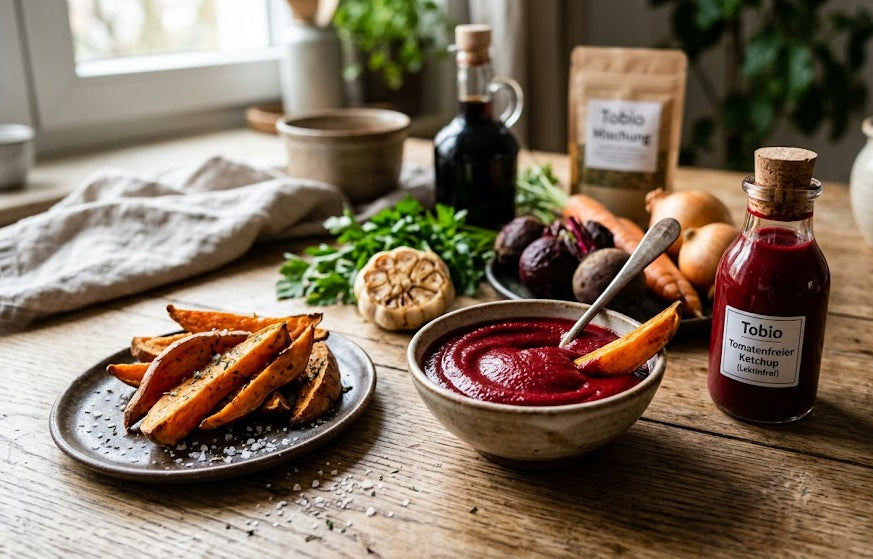
Tomatenfreier Ketchup (lektinfrei)
Entdecke ein leckeres Rezept für tomatenfreien Ketchup. Lektinfrei, cremig, natürlich gesüßt und einfach selbst gemacht – perfekt als Dip, Sauce oder Grillbegleiter.
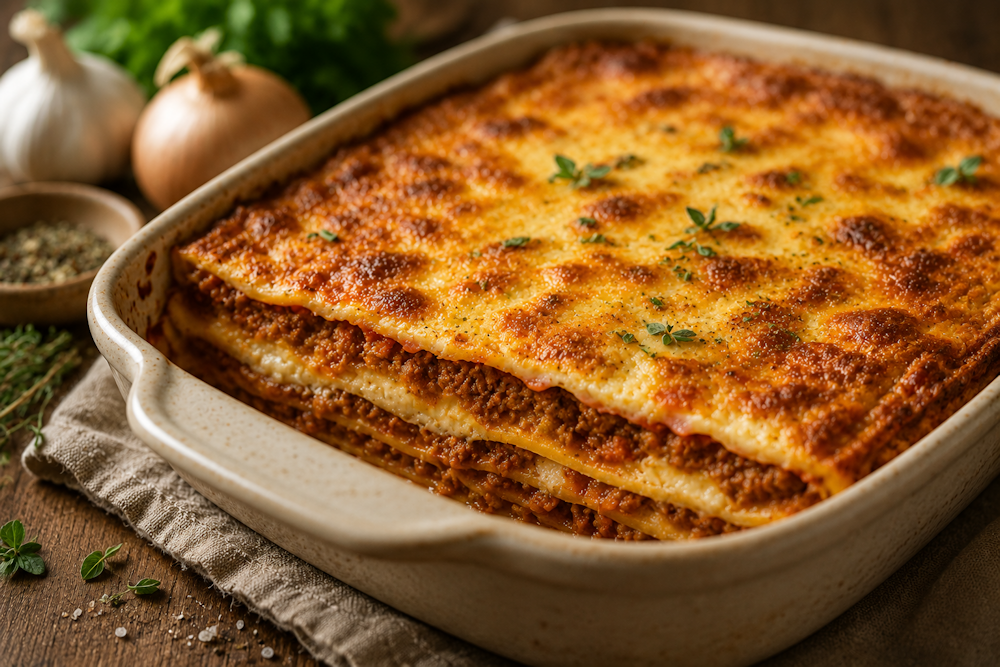
Lektinfreie Nomato Lasagne ohne Tomaten
Entdecke unsere lektinfreie Nomato Lasagne ohne Tomaten mit hausgemachten Lasagneblättern, cremiger Mornay-Sauce und aromatischer Nomato-Sauce aus TOBIO Bio-Zutaten.
Frequently Asked Questions (FAQ)
Why do toast and white bread help in the short term?
They are easily digested and often reduce stool volume in the short term.
Are they ideal in the long run?
Not necessarily. What matters is how they act immunologically, metabolically, and inflammation-related.
Where can I find more about leaky gut?
In the detailed article on Leaky Gut, Nutrition and Lectins.
Which foods are often avoided in cases of increased intestinal permeability?
Some people reduce:
- highly processed foods
- excessive alcohol
- Products that are individually poorly tolerated
- Foods rich in lectins
However, there is no universally valid dietary recommendation that is equally suitable for all people.
Sources
https://journals.sagepub.com/doi/full/10.1089/act.2020.29286.klu
https://pmc.ncbi.nlm.nih.gov/articles/PMC7036108/
https://pmc.ncbi.nlm.nih.gov/articles/PMC11640665/
Disclaimer
The information and recipes contained on this platform and linked media reflect solely my personal experience and serve for informational purposes and as culinary inspiration. The recipes and nutritional information do not constitute medical advice, diagnoses, or treatments, nor are they intended as a substitute for professional medical advice or treatment. Any recommendations presented in the media we manage do not replace consultation with medical professionals or nutritionists. Readers with specific health concerns, food allergies, individual dietary needs, or medical conditions should seek professional medical advice before implementing the recipes or nutritional recommendations described here. The author, publisher, and operator of this platform assume no responsibility for any health problems or damages that may arise from the use of the recipes or information contained on this platform. It is strongly recommended that you seek qualified medical advice or consult a nutritionist before making any changes to your current eating habits if you have any health concerns. The authors and publishers of this media assume no responsibility for the accuracy or completeness of the information and recipes provided, and it is the reader's responsibility to consider any allergic reactions, food intolerances, or other health concerns. Furthermore, neither the authors, publishers, nor operators assume any guarantee or liability for the effectiveness of the presented measures. Zarastro GmbH is not responsible for the content of websites accessed via hyperlinks.