
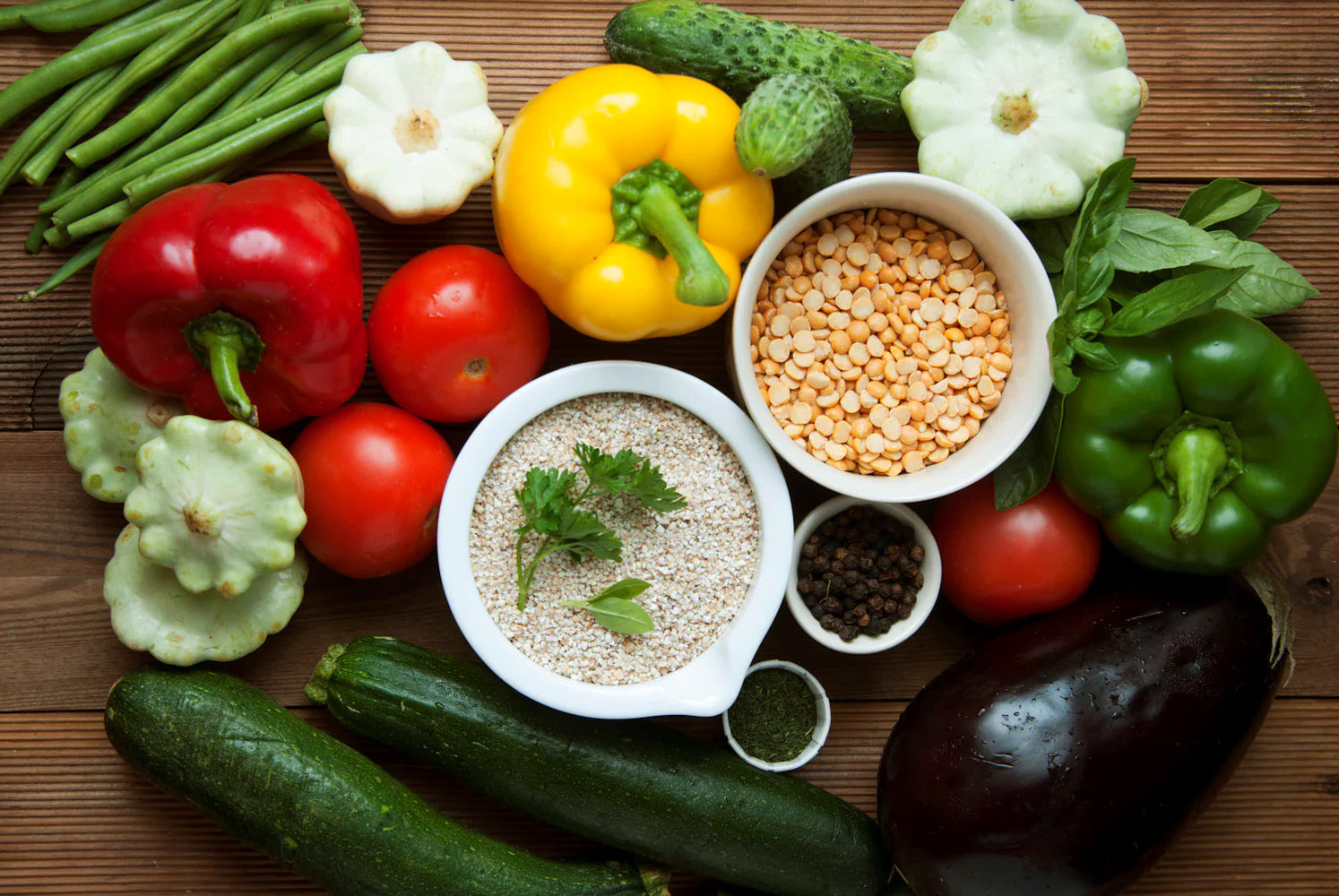
Let's be honest: When we think of healthy eating, what image comes to mind? Most often it's a colorful salad with a plump, deep red tomato gleaming in the center. From a young age, we've been taught that tomatoes are the ultimate food for our heart, our skin, and our vitality. "Eat your tomatoes, they're healthy!" – we've all heard that phrase before.
Perhaps you're experiencing something similar: You try to take care of your health, buy organic vegetables, and yet you still wonder why your intestines are upset, your joints hurt, or you simply feel tired and bloated after eating.
I was at exactly the same point. And the answer I found was – and perhaps will be for you too – a shock at first:
I, Tobias, am no longer eating tomatoes. Not a single one. 😱
Yet everyone always says that tomatoes are so healthy for the heart and so on...
So where does this contradiction come from?
Spoiler alert: Because tomatoes originally came to the Western world as ornamental plants due to their beautiful blossoms, and their toxicity was well known...
LYCOPIN
This substance, which belongs to the carotenoids, has been extensively studied, is responsible for the red color and actually has anti-inflammatory properties – see, for example, the study here:
Why I broke with the "superfood" myth
I know this sounds completely absurd at first. Why would you avoid a food that's packed with the antioxidant lycopene? The answer lies in the biochemistry of the plant itself:
Tomatoes are not made up of 100% lycopene...
The tomato doesn't actually want to be eaten. As a member of the nightshade family, it protects itself with a highly effective chemical defense against predators – and unfortunately, that includes us humans.
The dilemma: What looks healthy isn't always healthy.
Nature did not create plants to nourish us. Plants want to survive. To protect themselves from predators like insects or fungi, many plants – especially nightshades – have developed highly effective "poisons" over the course of evolution. One of these is lectins:
☣ ️Lectins
These are a group of plant-based "food toxins" that are associated with almost all "diseases of civilization":
https://www.ahajournals.org/doi/abs/10.1161/circ.137.suppl_1.p238
But tomatoes also pose another danger:
☣️Solanine
With a toxicity index LD50 of 43mg/kg, this substance is classified as highly toxic:
https://de.wikipedia.org/wiki/Solanin
https://www.sciencedirect.com/science/article/abs/pii/S0011502909000340?via%3Dihub
When I decided to give up tomatoes, it was the biggest hurdle for me personally. I didn't want to believe that this "superfood" could be partly responsible for my chronic ailments, my inflammation, and my "brain fog." But the experiment proved me wrong. After I completely eliminated tomatoes (and other nightshade vegetables) from my life, something happened that I would hardly have thought possible: My inflammation levels dropped, my joints calmed down, and my gut settled.
Why? Because while lycopene is a wonderful substance, tomatoes aren't 100% lycopene. They're a complex package that, in addition to valuable polyphenols, also contains these biochemical "attack substances." And for many people—especially those with a sensitive immune system or leaky gut—the negative effects of these lectins and solanine far outweigh the benefits of lycopene.
Why tomatoes remain an absolute "no-go".
I'm often asked if peeling or deseeding tomatoes can somehow make them "harmless." My answer is clear: Tomatoes have no place in a strictly lectin-free diet. Period. There are no half measures here, because the combination of highly reactive lectins and the neurotoxin solanine forms a toxic duo that keeps your immune system permanently on high alert.
The problem of the nightshade family
Tomatoes belong to the nightshade family ( Solanaceae ). These plants have developed an extremely aggressive survival strategy. Even if you remove the skin or painstakingly scoop out the seeds, significant residual amounts of lectins remain in the pulp and juice. For someone trying to heal their gut or suffering from autoimmune disorders, even a "prepared" tomato is an unnecessary gamble.
Why "a little" is already too much
Lectins don't work like calories—they act like biochemical switches. A single lectin molecule can be enough to trigger a cascade of inflammatory reactions in your intestinal lining. If we truly want to regenerate, we need to eliminate these disruptive factors 100%, instead of trying to mask them with kitchen tricks. In the world of TOBIO, there is no such thing as an "almost healthy" tomato.
The solution: Real taste without regrets
Giving up tomatoes doesn't mean the end of umami and flavor. We rely on real, lectin-free alternatives that won't sabotage your body:
Nomato sauce: An aromatic sauce based on root vegetables that will give your immune system a boost.
Go to the recipeLectin-free seasoning: With the right herbs and high-quality fats, you can create taste experiences where you won't miss the tomato for a second.
TOBIO's conclusion:
Be consistent. The tomato stays outside – your health will thank you.