
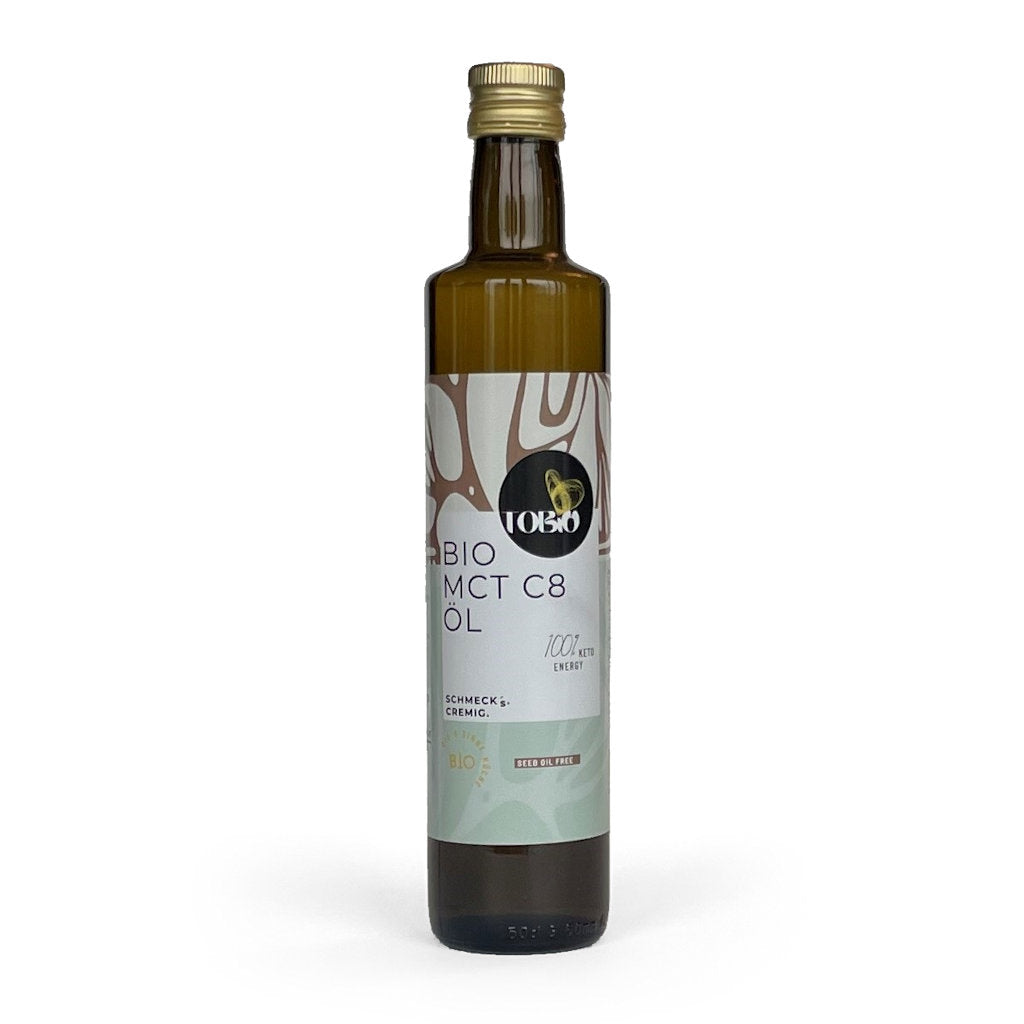
To understand the context, let's first examine the following:
WHY IS FASTING HEALTHY?
Put simply, our bodies can use fats, carbohydrates, and proteins to generate energy. Proteins and fats are considered essential nutrients, while carbohydrates are optional. More on that later.
If we abstain from carbohydrates (e.g., sugar, starch...) for an extended period, the body will eventually enter a fasting metabolic state. (Of course, glycogen stores will be depleted beforehand, etc., but for the sake of simplicity, we'll take a shortcut here.)
Once we reach the (correct) fasting metabolism, the following happens: In the liver, so-called ketone bodies are produced as an alternative energy source. (Yes, we can also directly "burn" fatty acids, and yes, gluconeogenesis (=synthesis of glucose) from fats and proteins also occurs, but again: We're keeping the explanation simple because it's about the principle and not about training scientists).
These ketone bodies are not only an energy source for us, but they also stimulate some fascinating processes such as reducing inflammation , restoring insulin sensitivity , and detoxification . What could this mean for us? More on that below.
Incidentally, this was even reported in the German Medical Journal years ago:
https://www.aerzteblatt.de/nachrichten/61898/Fasten-Antiinflammatorischer-Effekt-ueber-Beta-Hydroxybutyrat
But even putting all the modern research aside: In many cultures, fasting has always been a custom... People have long been aware of its associated benefits...
Short and simple:
Fasting is healthy because the ketone bodies produced during fasting stimulate processes in the body that "make us healthy".
Are there any other options?
to produce ketone bodies?
YES
They do exist - and here they are:
KETOGENIC DIET
By restricting carbohydrates in the diet and ensuring that protein intake is not excessive, the body can remain in a metabolic state similar to fasting, despite food consumption. This form of nutrition has been used successfully for 100 years to treat a wide variety of illnesses and represents a large and important chapter in its own right.
EXOGENIC KETONES
Certain ketone bodies can also be taken as a dietary supplement.
Medium-chain triglycerides (MCTs)
These occur naturally in foods that are typically rich in saturated fats, including milk and coconuts. (Side note: Sheep's milk and sheep's milk products are naturally particularly rich in MCTs. ) MCT extracts are also available in oil form, and these are especially interesting in the kitchen because they can be easily added, for example, to salads or as an addition to any fatty dishes. Furthermore, they can be used to make wonderful, creamy hot drinks such as coffee or tea. The American biohacker Dave Asprey learned the principle of butter tea from the Sherpas in Nepal and developed his Butter+MCT Coffee from it.
MCTs are absorbed directly in the duodenum without the use of fat-splitting enzymes (lipase) and are further processed into ketone bodies in the liver.
In plain terms, this means:
MCTs initiate many of the benefits of fasting (or a ketogenic diet) without actually fasting ;)
https://pubmed.ncbi.nlm.nih.gov/36904147/
https://pubmed.ncbi.nlm.nih.gov/35911092/
The following diagram from the above study shows that ketone bodies in the blood also rise when something has been eaten and MCT oil has been additionally ingested .
(red = MCT only, yellow = MCT + sugar, black = fasting)

What does that mean in practice?
Regardless of the reason why ketone bodies are circulating in one's blood, what matters is the practical effect.
There are many topics that have already been researched here.
Below we present the most important ones:
Enhanced cognitive performance
https://pubmed.ncbi.nlm.nih.gov/33220329/
Alzheimer's dementia prevention
https://pubmed.ncbi.nlm.nih.gov/35718870/
Weight loss support
https://pubmed.ncbi.nlm.nih.gov/12975635/
Prevention or improvement of
Metabolic syndrome, type 2 diabetes and microbiome
https://pubmed.ncbi.nlm.nih.gov/27187452/
Anti-inflammatory modulation of the immune system
https://pubmed.ncbi.nlm.nih.gov/17570262/
Anti-aging
https://pubmed.ncbi.nlm.nih.gov/34684426/
https://www.sciencedirect.com/science/article/pii/S1279770724004834?via%3Dihub
Cancer
https://pubmed.ncbi.nlm.nih.gov/38189128/
https://pubmed.ncbi.nlm.nih.gov/36432618/
https://pubmed.ncbi.nlm.nih.gov/35477756/

How can I use MCTs?
Since MCT oils are practically tasteless and odorless, they can be used in a variety of ways:
- Mixed in hot drinks
- in salads
- In desserts such as puddings, creams, cakes...
- As a complement to fatty foods such as ham and eggs, dumplings with egg, schnitzel, etc.
CAUTION : MCT oils should not be used for frying.

Why in drinks?
Mixing it into hot drinks such as coffee, tea, cocoa, milk is particularly popular and also exciting...
The reason: The emulsion intensifies the ketone body-producing "ketogenic" effect - see an interesting study from 2017 which found that this resulted in the formation of between 2 and 4(!) times as many ketone bodies:
How can I measure the ketone bodies in my blood?
Or: How do I know that I'm in ketosis?
URINE TEST STRIPS
This inexpensive test option is very inaccurate, but easy to perform.
BREATH TEST
There are testing devices that can measure the concentration of ketone body end products in exhaled breath. Advantage: No test strips are needed; disadvantage: Very inaccurate.
CAPILLARY BLOOD
Similar to blood glucose meters, there are also devices that can measure the level of ketone bodies in the blood. Advantage: Very accurate; disadvantage: Requires finger pricks and uses special disposable test strips which are significantly more expensive.
CKM SENSOR (Continuous Ketone Measurement)
All three of the above-mentioned options have the disadvantage of providing only snapshots in time. A new alternative is a CKM sensor, which, like a CGM sensor, is attached to the triceps for 14 days and transmits the current measurement to a mobile phone at short intervals. In my opinion, this system is the best option, especially at the beginning, to find the right dose depending on other keto measures (intermittent fasting, exercise, diet).

Clinically noticeable benefits also emerge over time. People report increased energy, mental clarity, improved mental focus, better sleep , and several other improvements.
Personally, I try to keep my levels between 2 and 3 mmol/l on average - that feels best to me.
What are the differences between MCT oils?
Or: What should I pay attention to when buying?
- What was the extract derived from? Cheap MCT oils are made from palm oil, high-quality ones from coconut.
- Purity level? How many other fatty acids are contained that could potentially cause side effects?
- Organic quality? What is the risk of contamination?
- Which fatty acids are included? C10 is cheaper, but unfortunately causes more digestive problems than C8.